





法国设计师 Katja Pargger,在理性与装饰之间建立秩序 首
2026-02-10 22:19
在与 Katja Pargger 的交流中,她始终强调建筑、室内、家具与物件从不被视为彼此独立的领域,而是同一学科在不同尺度上的连续表达,结构、空间与细节的同步生成,形成一种无层级的整体性工作方式。在 Villa N 中,这一理念转化为“单一建筑有机体”的构想——家具与嵌入式元素并非事后添加,而是被嵌入建筑本身。正如 Katja Pargger 所言,这种方式带来的是清晰而自由的空间秩序:精准却不僵化,使住宅成为真正可以被长期居住的场所,并非是被布置出来的舞台。
During the conversation with Katja Pargger, she emphasized that architecture, interior design, furniture and objects are never regarded as separate domains, but rather continuous expressions of the same discipline at different scales, the simultaneous generation of structure, space and details, forming an overall working method without hierarchical divisions. In Villa N, this concept was transformed into the idea of a single architectural organism - furniture and embedded elements were not added afterwards, but were integrated into the building itself. As Katja Pargger said, this approach brings about a clear and free spatial order: precise yet not rigid, making the residence a place that can truly be lived in for a long time, rather than a stage that is merely arranged.


设计师 Katja Pargger
她告诉我们:“Villa N 并非意在成为一个固定的“完成品”,反而更像是一种立场的表达,这是种拒绝仿古与过度设计的工作方法。”项目在经典结构与当代生活之间建立起克制而连贯的关系,将“遗产”视为可被居住并持续转化的空间基础,而非需要被复制的形象。当代的舒适度与个体的表达被内化为比例、材料与氛围之中的细微选择,由此指向一种更安静、更持久、更内敛的居住理想:以时间为尺度,而非以效果为导向。
She told us: Villa N is not intended to be a fixed finished product, but more like an expression of a stance. This is a method of work that rejects retroism and excessive design. The project establishes a restrained and coherent relationship between the classic structure and contemporary life, regarding heritage as a space foundation that can be lived in and continuously transformed, rather than an image that needs to be replicated. The contemporary comfort and individual expression are internalized as subtle choices within proportions, materials and atmosphere, thus pointing to a more quiet, more lasting and more restrained living ideal: measured by time, rather than by effect.


印际:Villa N 既是一座受保护的现代主义联排别墅,也是一个需要进行扩建的场地。从您的角度看,这个项目的核心挑战是什么——是历史责任、空间连贯性,还是新旧关系的协调?
YINJISPACE: Villa N is both a protected modernist townhouse and a site for expansion. From your perspective, what was the core challenge of this project — was it a question of historical responsibility, spatial coherence, or negotiating the relationship between old and new?
Katja Pargger:真正的挑战在于拒绝将项目简单化。我们并未将其视为一场“新与旧的对话”,而是同时回应多重条件:在保留原有建筑重要部分的同时,拆除1930年代的扩建体量,并在其位置上新建一个当代空间。新体量的设计延续了原有房屋的比例、节奏与空间逻辑,而非制造形式上的断裂。项目的核心并不是对立新旧,而是通过精准而当代的建筑介入,延续这座房子的生命。
Katja Pargger: The real challenge was to refuse simplification. It would have been easy to frame the project as a dialogue of contrasts, but that was never our intention. Instead, we chose to hold several conditions at once: preserving significant parts of the original structure, while fully demolishing the 1930s extension and constructing a new volume in its place. Designing this new part from the ground up required a clear architectural position. Rather than introducing a formal rupture, we worked in continuity with the logic of the existing house — its proportions, rhythms, and spatial intelligence. The project is not about opposing old and new, but about extending the life of the house through a precise and contemporary architectural act.


印际:您曾提到要将原本分散的结构转变为一个连贯的整体。这一“整体统一”的理念是如何在空间组织、结构或材料层面实现的?
YINJISPACE: You have spoken about transforming a previously fragmented structure into a coherent whole. Could you share how this idea of “overall unity” was achieved through spatial organisation, structure, or material strategies?
Katja Pargger:统一性首先来自对动线的重新梳理,以清晰可读的空间序列取代原有的碎片化状态,使得整个空间能够被当作一个连贯的空间叙事来体验。同时,通过对材料的严格控制与重复运用——从结构到细部——建立起贯穿全案的秩序。我们的目标不是消除差异,而是为差异赋予清晰且易于理解的整体框架。
Katja Pargger: Unity emerged through a process of clarification. Circulation was restructured to replace fragmentation with legible sequences, allowing the house to be experienced as a continuous spatial narrative rather than a series of disconnected rooms. This spatial coherence is reinforced by a strong sense of material discipline. By deliberately limiting the palette and repeating materials across scales — from structure to detail — we established a framework that holds the project together. The goal was not to erase differences, but to give them a clear and intelligible order.


印际:Villa N 中的材料运用十分清晰且克制,尤其是石材同时呈现原始与精致的两种状态。在一个日益以图像为导向的文化中,您如何看待材料作为“价值承载者”的意义?
YINJISPACE: Materials in Villa N are used with great clarity and restraint — particularly stone, which appears both in raw and refined forms. In an increasingly image-driven culture, how do you see materiality functioning as a bearer of value rather than a visual effect?
Katja Pargger:材质性是建筑抵抗速度与即时性的方式。尤其是石材,它所具有的重量、质感与时间厚度,与瞬时影像形成对照。通过原始与精制并置的方式,我们关注的是材料的深度与老化能力,而非表面的效果。在以图像为主导的文化中,“克制”本身即是一种立场——材料被选择不是为了取悦视觉,而是为了被触摸、被使用,并在时间中持续存在。它们的价值来自恒久,而非即时的冲击。
Katja Pargger: Materiality is where architecture resists speed. Stone, in particular, carries a physical and temporal density that stands in opposition to instant imagery. By working with it in both raw and refined states, we sought to reveal its depth — its weight, texture, and capacity to age — rather than its surface. In a culture dominated by images, restraint becomes a form of engagement. Materials are not chosen to perform visually, but to be lived with, touched, and worn over time. Their value lies in permanence, not in immediate effect.

La Villa N 是由建筑师兼设计师 Katja Pargger 设计的项目。这座被列为保护建筑的联排别墅,由 Pierre Barbe——勒·柯布西耶和罗伯特·马莱-史蒂文斯的亲密合作伙伴,于1931年至1936年间建造,并于2021年交由 Katja Pargger 负责翻新和扩建。
La Villa N is a project by architect and designer Katja Pargger. This classified townhouse, built between 1931 and 1936 by Pierre Barbe—a close associate of Le Corbusier and Robert Mallet-Stevens—was entrusted to Katja Pargger in 2021 for renovation and expansion.


这座住宅在古典主义与现代美学之间取得精妙平衡,并因其地处罕见的地理位置而更显珍贵。它隐匿于一座占地1700平方米的私家花园之中,园内树木繁茂,珍稀的植物点缀其间。这里曾是点彩画画家 Jac Martin-Ferrières 的居所,场地内原本还包含一座建于20世纪50年代的艺术家工作室,现因年久失修已无法保留,但也曾为这片场地增添过一抹诗意的氛围。
A prime example of early 20th-century private architecture, this classically inspired home is distinguished by its modern aesthetic and rare location: hidden within a 1,700-square-meter private garden with mature trees and rare species. Once home to pointillist painter Jac Martin-Ferrières, the property also included a 1950s artist’s studio—now too deteriorated to be preserved—that once contributed to the site’s poetic atmosphere.


在法国深耕二十年的 Katja Pargger 事务所接手该项目时,确立了清晰而克制的设计立场:在尊重与保留建筑独特个性的同时,将自然以更为细腻而有机的方式融入空间之中。通过这一策略,原本分散的建筑结构被重新梳理与整合,逐步转化为一个层次清晰、关系连贯的整体。
Having been based in France for 20 years, Katja Pargger’s firm approached this project with the goal of preserving its unique character while seamlessly integrating nature into the architectural design. The objective was to transform the fragmented structure into a coherent whole.


秉承现代主义的传统,此次修复旨在重现联排别墅最初的优雅气质:经典外立面以大理石颗粒饰面呈现出细腻而克制的质感,而室内空间则呼应维也纳分离派与 Josef Hoffmann 的设计精神,在理性秩序与装饰美学之间取得平衡。
In keeping with modernist traditions, the restoration restores the townhouse’s original elegance, with its classic facades finished in marble granules, while the interiors reflect the influence of the Viennese Secession and Josef Hoffmann.

此次扩建部分在汲取事务所全球大型项目经验的基础上展开,以几何体量与大尺度垂直开口塑造鲜明而克制的当代表达。通过对场地标高的整体重组,花园层与新建空间之间形成了自然流畅的过渡。设计中对于“连续性”的重视进一步延伸至户外:环绕式露台借鉴了鲁道夫·辛德勒的加州建筑语言与日本“缘侧”(engawa)的空间原型,使室内与室外在行走、视线与感知层面实现无缝衔接。
The expansion—designed with the expertise gained from large-scale projects worldwide—features geometric forms and large vertical openings. A comprehensive restructuring of the site levels ensures a fluid transition between the garden level and the new spaces. The design’s emphasis on continuity extends outdoors with a surrounding terrace, inspired by Rudolf Schindler’s Californian architecture and the Japanese engawa, seamlessly linking interior and exterior.


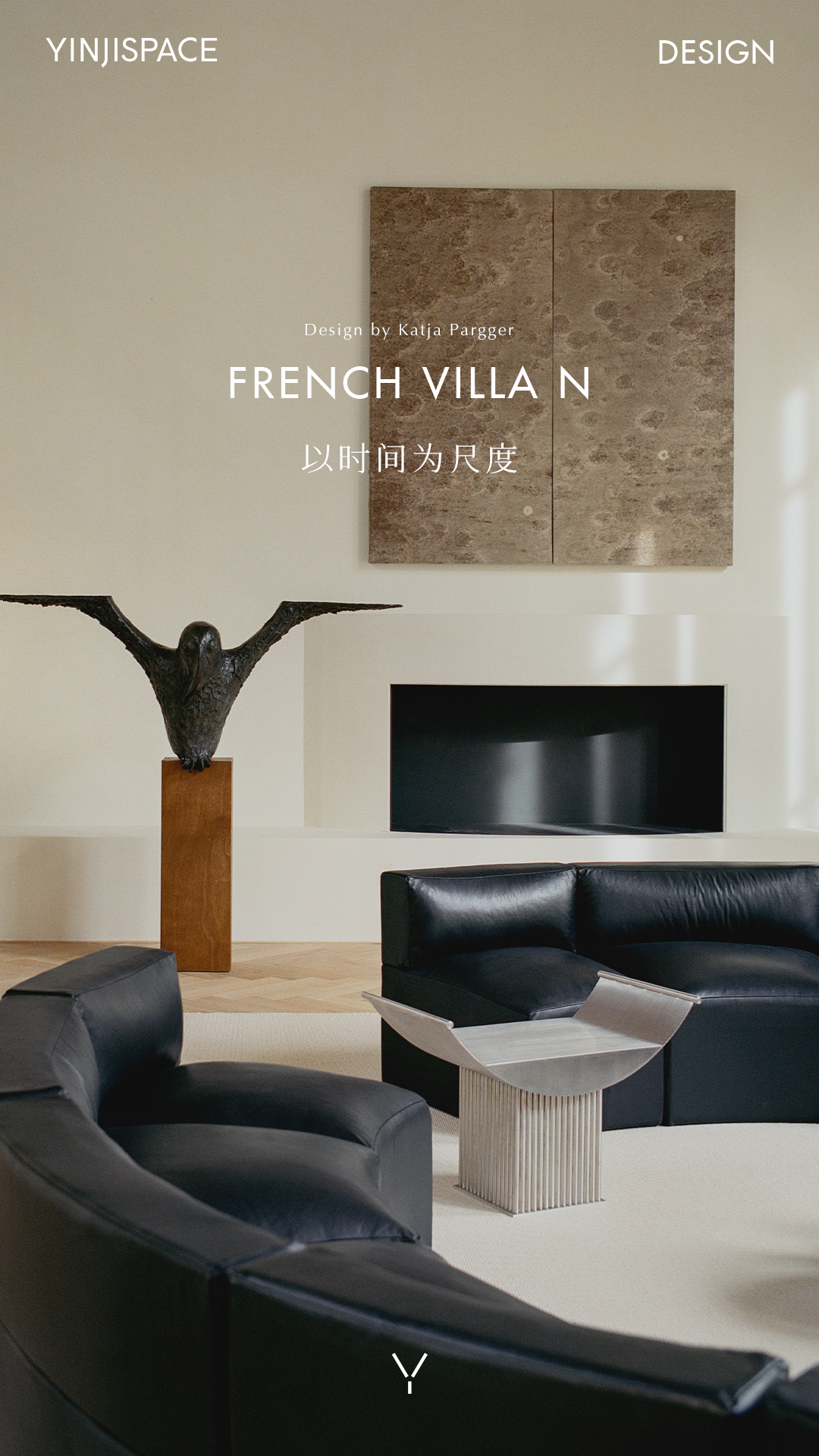
花园后方,一个低调却引人注目的游泳池静静嵌入景观之中,进一步强化了项目与自然环境之间的融合。室内设计深深植根于包豪斯原则,始终维持建筑与家具之间的和谐关系。拥有教堂式高挑天花的客厅中,日本风格的橡木天花板与 Katja Pargger 定制设计的扶手椅、书架与图书馆空间形成细腻对话。木材、皮革、不锈钢、漆与石灰等原材料以其最本真的状态被呈现,构成一种结构清晰而又精致内敛的美学秩序。
A discreet yet striking swimming pool at the rear of the garden further enhances the project’s integration with nature. The interiors, deeply rooted in Bauhaus principles, maintain a harmonious relationship between architecture and furnishings. The cathedral-ceiling living room features a Japanese-inspired oak ceiling that dialogues with custom-designed armchairs by Katja Pargger, alongside shelving and a library. Raw materials—wood, leather, stainless steel, lacquer, and lime—are showcased in their pure form, providing a structured yet sophisticated aesthetic.



推荐作品

相关文章
-
2018年走过了四分之一,LOGO设计趋势也清晰了LOGO设计
-
2018年走过了四分之一,LOGO设计趋势也清晰了LOGO设计
-
2018年走过了四分之一,LOGO设计趋势也清晰了LOGO设计