





比利时修道院 Abdij Roosenberg 沉思之旅 首
2026-01-11 21:05
九月底的比利时,初冬的气息已渗入弗拉芒的森林。在一个温润的上午,我们穿过层林,一片豁然开朗的空地中央,罗森伯格修道院静静伫立。它不像一座建筑,更像一块被时光与思想精心打磨的白色巨石,沉淀在大地之上。
At the end of September, the early chill of winter already permeated the woods. On a mild morning, we walked through the a forest in Flanders until a clearing opened up, revealing Roosenberg Abbey standing silently at its center. It resembled not so much a building as a white monolith, patiently honed by time and thought, settled into the earth.


初见修道院,其外观的极致简洁近乎于宣言。厚重的砖墙被统一的白色抹灰覆盖,质地粗糙而素净,拒绝了任何装饰性的解读。一层轻薄如线的黑色釉面陶瓦屋顶精准地勾勒出轮廓,与白墙形成最本原的对比。长长的立面,除了入口,仅在二层遥远处开了一扇小窗,展现出一种极致的克制。
The initial encounter with the abbey is a statement of extreme simplicity. The massive brick walls are uniformly clad in rough, plain white plaster, rejecting any decorative reading. A thin, line-like roof of black glazed clay tiles precisely outlines the form, creating an elemental contrast with the white walls. The long façade, punctuated only by the entrance and a single small window on the distant second floor, exhibits a profound restraint.


身为建筑师的向导老师Louise在此为我们揭示了起点:建筑师唐·汉斯·范德兰(Dom Hans van der Laan)不仅是一位本笃会修士,也是一位空间秩序的追寻者。他创立了一套独特的“塑性数”比例系统,旨在取代静态的黄金分割,通过一系列渐进、和谐的比例(其核心近似于3:4的关系),创造出既能被身体感知、又能安抚精神的建筑空间。眼前这堵沉默的白墙,正是他一切思考的坚实起点,背后隐藏着精密计算的比例秩序。
Our guide, Louise, an architect herself, revealed the starting point here: the architect, Dom Hans van der Laan (1904-1991), was not only a Benedictine monk but also a seeker of spatial order. He developed a unique proportional system called the Plastic Number, intended to replace the static golden section. Through a series of gradual, harmonious ratios—centered around foundational relationships like 3:4—he sought to create architecture that could be physically perceived and spiritually calming. This silent white wall was the solid foundation of his entire vision, masking the intricately calculated order within.

穿过大门,我们并未直接进入室内,而是踏入一个露天的前院。空间瞬间推翻了常见的矩形想象,形成一个独特的梯形平面。范德兰通过精妙的角度设置,使两条侧翼与主体旋转相接,在平衡中注入了一丝不易察觉的动态。
Passing through the main gate, we did not enter an interior space but stepped into an open forecourt. The space immediately overturned any expectation of a common rectangle, forming a distinctive trapezoidal plane. Through a subtle angular shift, van der Laan rotated two wings in relation to the main body, injecting a hint of dynamic movement into the balanced composition.


环绕庭院的回廊,是建筑韵律的初次实体展现。粗壮的白色砖柱以严谨的间距重复,阳光斜射,在石板地上投下规律而深邃的光影序列。行走其间,步伐不由自主地放缓。“塑性数”比例动态的秩序感已在此处的柱廊节奏中预先显露。范德兰曾言,建筑的秩序应如日、月、四季般让人感知时间的尺度,在这里,每一步都像是踩在时间的节拍上。
The cloister surrounding the courtyard is the first tangible manifestation of the buildings rhythm. Sturdy white brick pillars repeat at a rigorous interval. As sunlight slants through, it casts a pattern of deep, regular shadows onto the stone floor. Walking through, ones pace instinctively slows. The dynamic order of the Plastic Number is prefigured in the rhythm of these colonnades. Van der Laan believed architectural order should make one perceive the measure of time, like days, moons, and seasons. Here, each step felt like moving to its quiet beat.


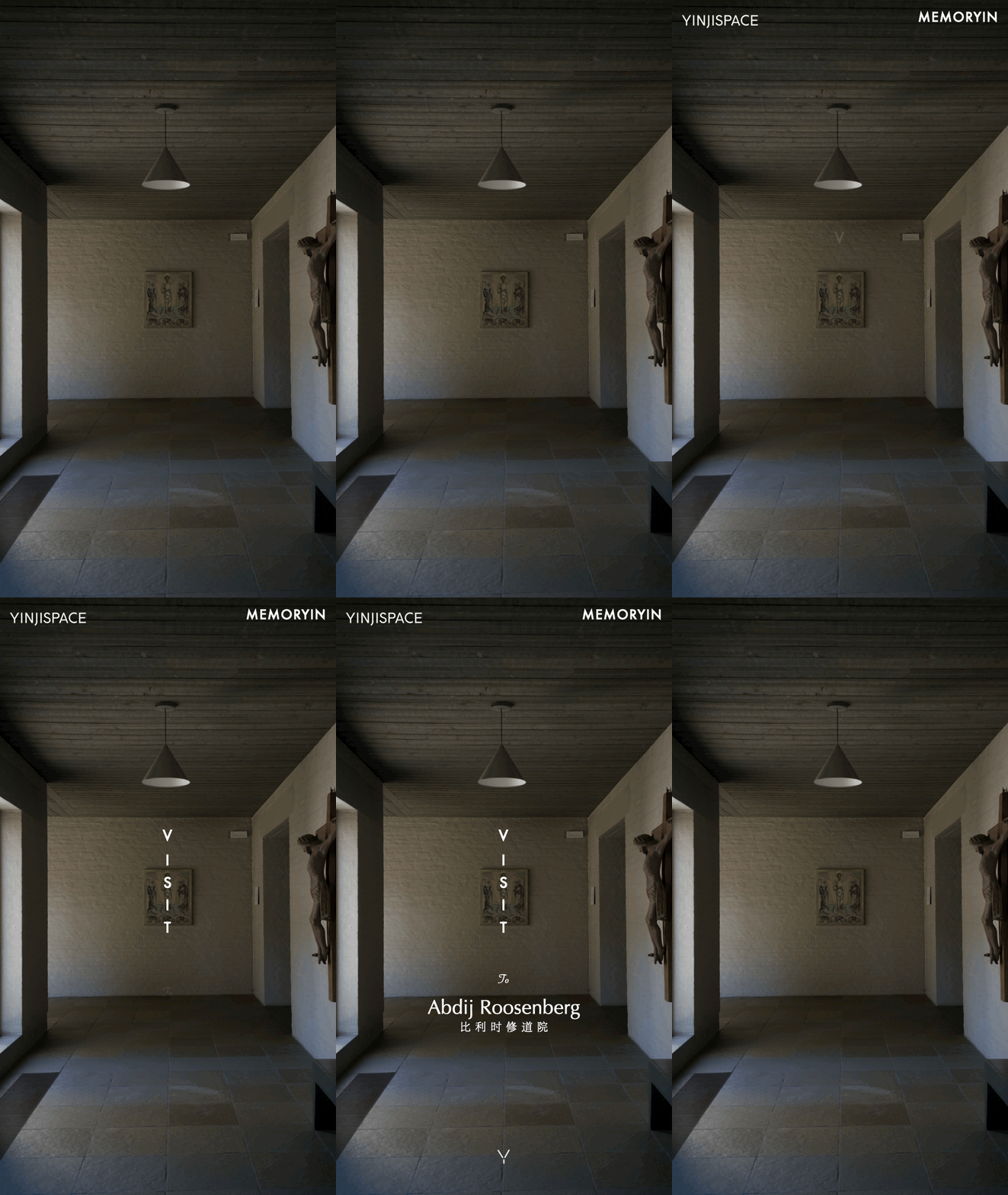
从前院回廊转入建筑内部的前厅,光线骤然收敛,空间陷入一片温柔的昏暝。这是建筑师精心设计的视觉重启——在经历户外的明亮与回廊的韵律之后,感官先沉入一片“空”与“静”。
Moving from the open cloister into the interior vestibule, light abruptly receded, and the space softened into a gentle gloom. This was the architects deliberate visual reset—after the exterior brightness and the cloisters rhythm, the senses were first submerged in a void of emptiness and quiet.


在这片昏暝中,唯一的光源具有了神圣的指引性。它来自楼梯间:光线从高处的小窗倾泻而下,沿着阶梯缓缓流淌,使其成为昏暗大厅中明亮的视觉焦点。攀登的过程,先是被光线吸引,继而与光线同行,身体在移动中完成了一次由暗向明的仪式性过渡。
In this dimness, the only light source assumed a sacred, guiding quality. It flowed from the stairwell: light poured from a high window, streaming down the steps, making it a luminous focal point in the dusky hall. The act of ascending—first drawn towards the light, then traveling alongside it—became a ritual transition from darkness to illumination.


登上二楼,是修女与客人的居室。这里的空间尺度体现了对人居最细微的体贴,其长宽往往遵循着源自“塑性数”的和谐比例,如经典的6:7。
On the second floor lay the cells for the sisters and guests. The dimensions here show the most delicate consideration for human dwelling, their length and width often following harmonious ratios derived from the Plastic Number, such as the classic 6:7.


两扇方形小窗将花园的绿意框成一幅鲜活的画。室内的每一件家具——床、柜、桌、椅——皆由范德兰设计,选用原生橡木,呈现木材最本质的纹理。家具的形态与比例,均与建筑本身的逻辑同源,人置身其中,被一种从宏观到微观的绝对和谐所包围。这里没有“物品”,只有建筑思维的延续。
Two square windows framed the gardens greenery into a living painting. Every piece of furniture—bed, wardrobe, table, chair—was designed by van der Laan, crafted from native oak to reveal the woods essential grain. Their form and proportion share the same genesis as the architecture itself. One is enveloped in an absolute harmony from the macro structure to the micro object. Here, there are no mere items, only the continuation of an architectural logic.


回到一楼,我们穿过一系列被称为“半空间”的功能区域,如食堂、图书馆。这些空间的一侧是开阔的主要区域,另一侧则是连贯的走廊。范德兰在此实践了精妙的构图:走廊与大厅的宽度之比为2:5。
Returning to the ground floor, we passed through a series of functional half-spaces, such as the refectory and library. One side of these rooms opens into a broad main area, while the other borders a continuous corridor. Van der Laan practiced a refined composition here: the ratio of corridor width to hall width is 2:5.


更进一步,结构柱的间距与窗洞的间距,又各自遵循着一套交织的、由“塑性数”衍生出的不同节奏。当目光掠过,仿佛在阅读两套交织但和谐的空间韵律,复杂而有序,这正是他所谓“使空间如诗歌般押韵”的体现。
Further, the spacing of the structural piers and the window openings each follow distinct, interwoven rhythms derived from the Plastic Number. As the eye passes over them, it seems to read two layered yet harmonious spatial melodies—complex yet ordered. This is his embodiment of making space rhyme like poetry.


穿越所有空间序列的铺垫,最终抵达教堂,这是整个建筑旅程的精神顶点。其形制极为独特:一个矩形基座之上,矗立着一个纯粹的八角形竖向体量。
After moving through this sequenced progression, one finally arrives at the church, the spiritual apex of the architectural journey. Its form is singular: upon a rectangular base stands a pure, vertical octagonal volume.


祭坛位于中心,光线从高处漫入,照亮粗糙的白墙。整个空间的整体比例,被严格控制在“塑性数”所追求的、最平衡的3:4关系之中。这里没有符号化的神圣,只有由绝对的比例、沉静的光线与质朴的材料共同引发的崇高静默。它完美诠释了范德兰的理念:建筑应使空间、形体和尺度融为一体,与我们内在的感知相契合。
The altar sits at the center. Light filters from above, illuminating the rough white walls. The overall proportion of the space is strictly governed by the most balanced 3:4 ratio sought by the Plastic Number. There is no symbolic sacredness here, only a sublime silence evoked by absolute proportion, tranquil light, and humble material. It perfectly realizes van der Laans belief: architecture should integrate space, form, and measure into one, aligning with our inner perception.


从教堂的静默中走出,步入被四面建筑翼楼严密围合的中央花园,体验完成了一次循环——从自然(森林)到人为(建筑),最终回归一个被“建筑化”的自然。
Emerging from the silence of the church into the central garden, tightly enclosed by the four wings of the building, the experience completes a cycle—from nature (the forest) to human artifice (the building), and finally to an architecturalized nature.

花园的设计是内在精神的终极表达。它并非风景画,而是建筑的延伸。一圈修剪整齐的方形灌木,严格遵循建筑的轮廓线;平整的草坪上,几棵大树姿态舒展。这里没有多余的曲线与色彩,一切皆是几何与生命的对话,正如范德兰的形容:这是《雅歌》中所描绘的 “关闭的花园”(hortus conclusus) ,一个内向的、仅属于沉思者的宇宙。
The garden is the ultimate expression of this inward spirit. It is not a landscape painting but an extension of the architecture. A border of neatly trimmed, square shrubs strictly follows the buildings outline; on the level lawn, a few trees stand with graceful posture. There are no superfluous curves or colors, only a dialogue between geometry and life. As van der Laan described, it is the hortus conclusus (enclosed garden) from the Song of Songs—an inward cosmos belonging solely to contemplation.

回望罗森伯格修道院,它已超越其物理存在,成为了一座“思想的容器”。范德兰通过“塑性数”将无形的精神节律转化为可触可感的物质秩序,证明了真正的简洁并非匮乏,而是深邃的基石;和谐的比例,是一种直抵心灵的空间语言,持续邀请着每一位访客,开启一场向内的探寻。
Looking back at Roosenberg Abbey, it transcends its physical existence to become a vessel for thought. Through the Plastic Number, van der Laan translated intangible spiritual rhythms into a tangible, tactile order. He demonstrated that true simplicity is not deprivation, but the foundation of depth; that harmonious proportion is a spatial language speaking directly to the soul, perpetually inviting every visitor to embark on an inward exploration.



推荐作品


相关文章
-
2018年走过了四分之一,LOGO设计趋势也清晰了LOGO设计
-
2018年走过了四分之一,LOGO设计趋势也清晰了LOGO设计
-
2018年走过了四分之一,LOGO设计趋势也清晰了LOGO设计