





低调 海滩别墅
2026-01-14 20:21
承载文化意义
Blairgowrie 住宅
| Blairgowrie




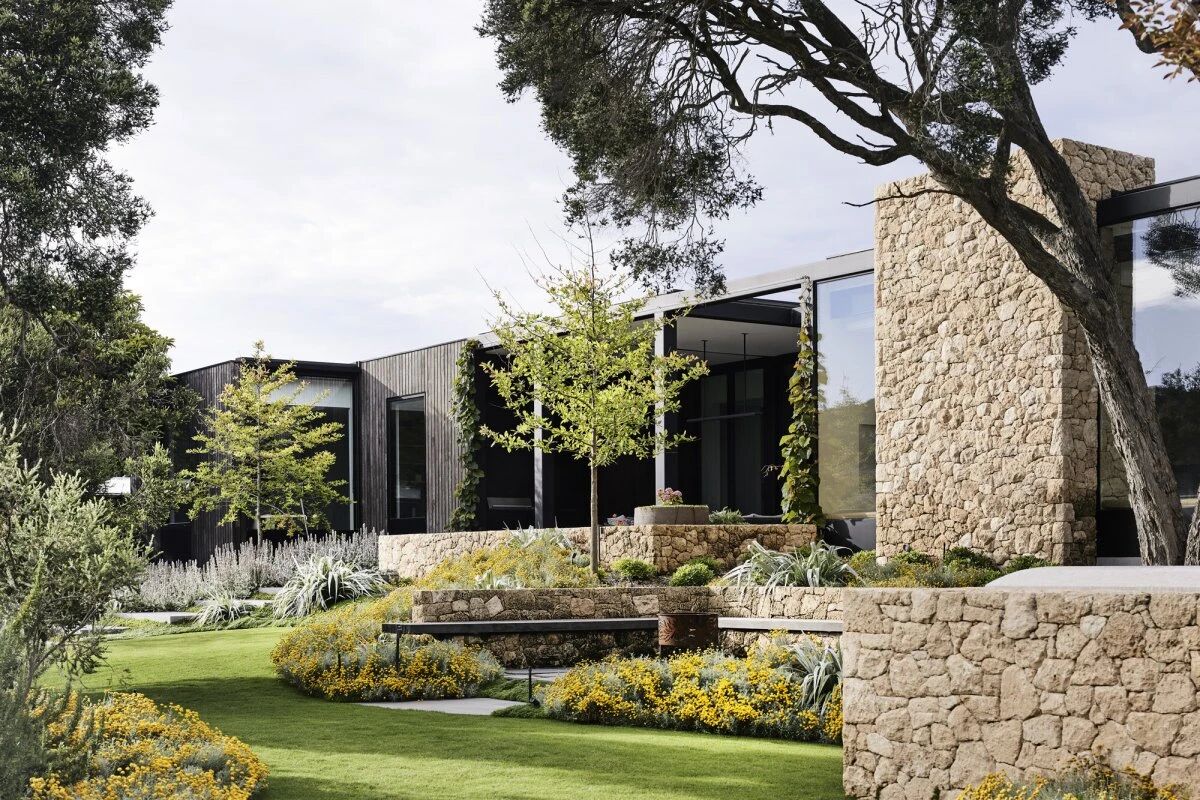
位于澳大利亚Mornington Peninsula的一座海滩别墅,由当地的设计工作室Powell and Glenn Architects和Watts Studio设计。房主想要一座与花园紧密相连,能够舒适地容纳小型和大型人群,适合夏季和冬季生活的低调的海滩别墅。因此,住宅内的花园景观和现有的月桂树是设计形式和布局的关键因素。住宅位于基地的顶部,朝东北朝向花园,由一系列的木材亭子和石灰石等材料组成,减少材料的选择,使建筑与景观的关系更加清晰。
A beach house on the Mornington Peninsula, Australia, designed by local design studios Powell and Glenn Architects and Watts Studio. The homeowners wanted a discreet beach house that was closely connected to the gardens and could comfortably accommodate small and large groups of people for both summer and winter living. As such, the garden landscape and existing laurel trees within the dwelling were key elements in the form and layout of the design. The dwelling is situated at the top of the site, facing north-east towards the gardens, and consists of a series of timber pavilions and limestone, amongst other materials, reducing the choice of materials and making the relationship between the building and the landscape clearer.


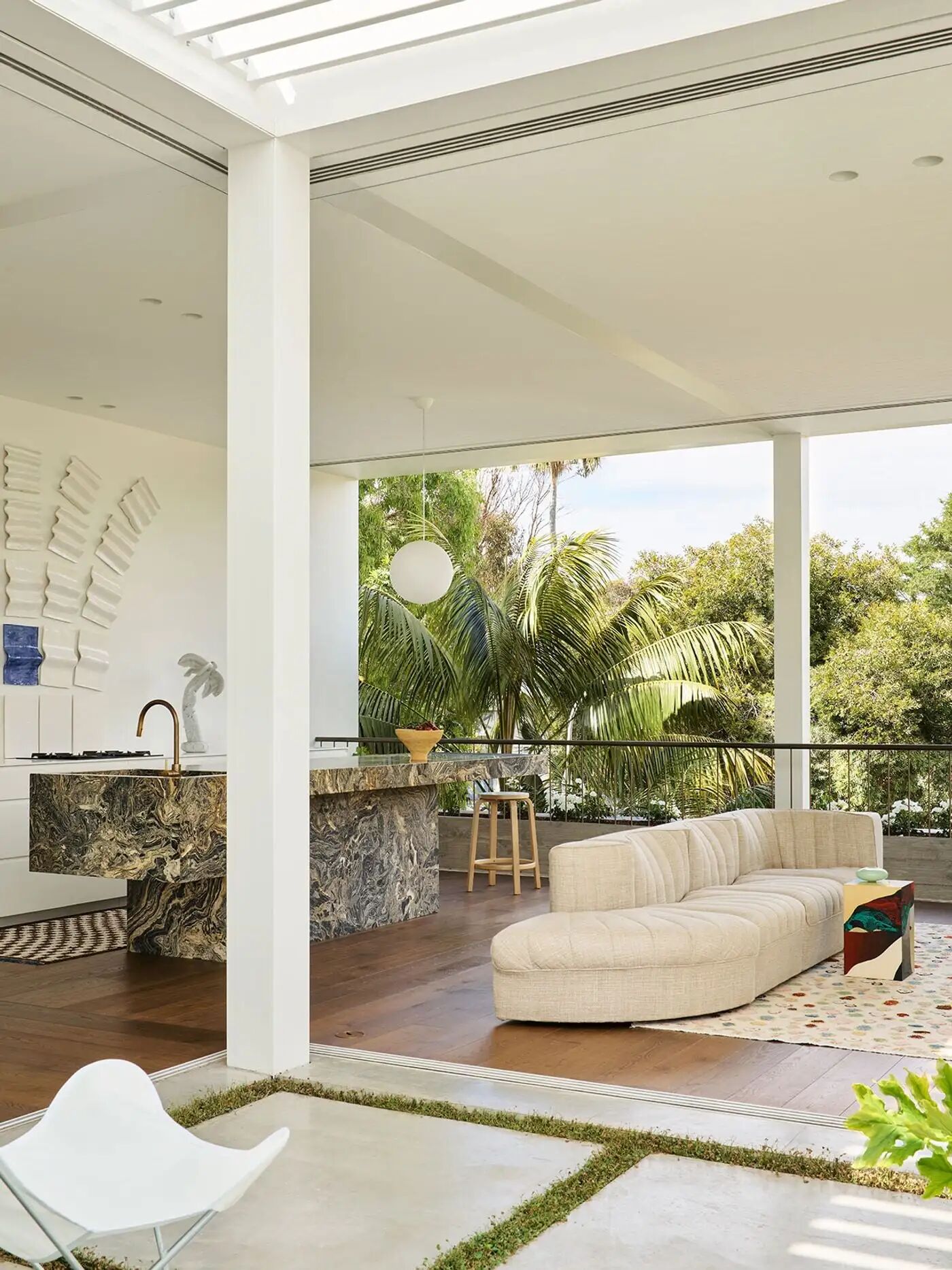
室内设计的重点是景观,因为房子坐落在基地的顶部,朝向花园的东北面。室内设计是舒适、明亮、有海滩的感觉,带有工业气息。Watts Studio不想要老套的海滩别墅氛围,而是一个精心设计的,注重精心策划的材料选择的家庭感觉。
The interior design focuses on the landscape as the house sits at the top of the base, facing north-east towards the garden. The interior design is cosy, bright and has a beachy feel with an industrial twist.Watts Studio didnt want a cliché beach house vibe but a well-designed, homely feel with a focus on carefully curated material choices.
DV 公寓
| DV


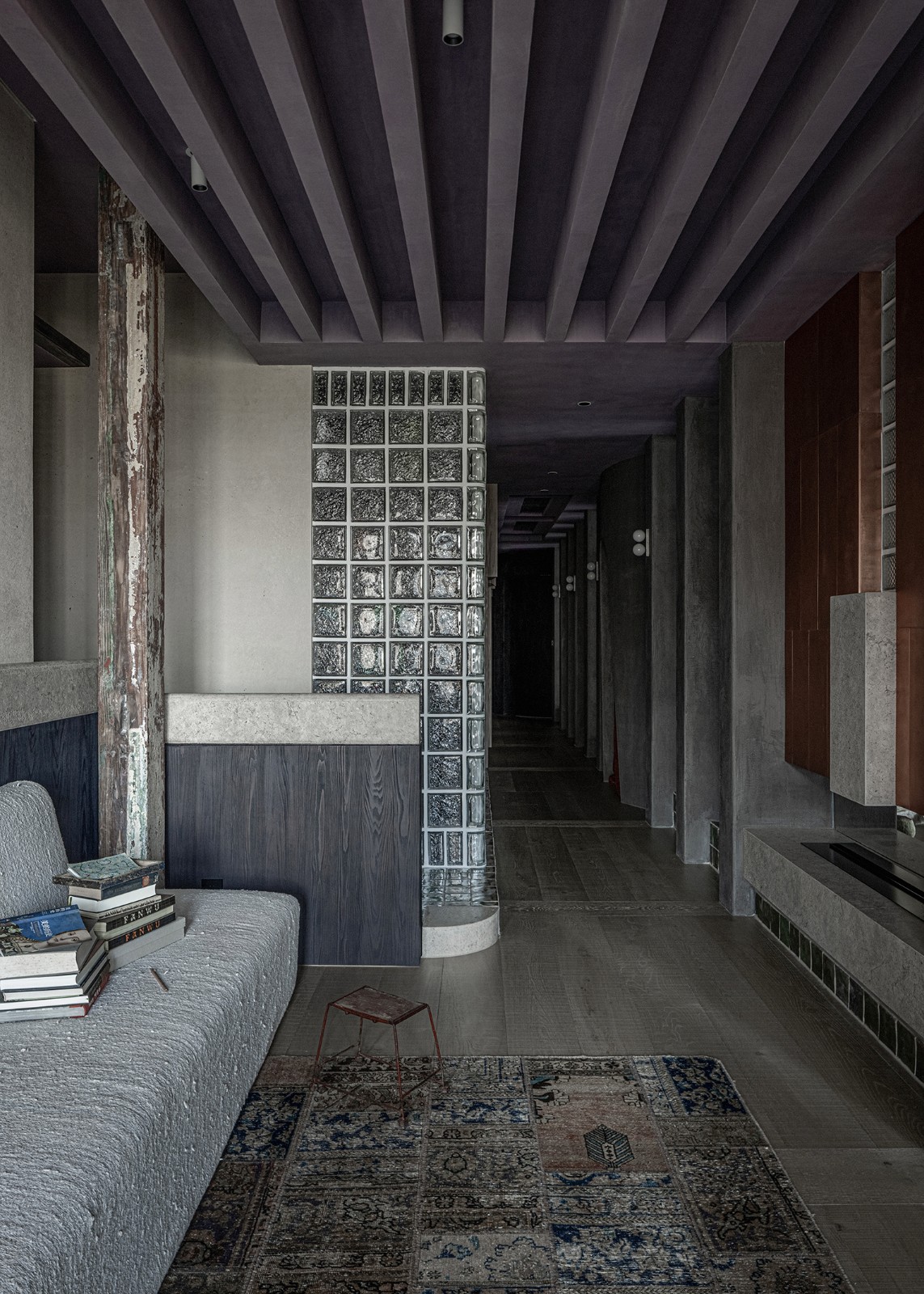
这间宽敞的公寓建于60年代,位于圣保罗市热闹的Jardins社区,规划陈旧且零散,无法满足客户的现代需求。这位成功而年轻的27岁律师要求Atelier Peclat-Chow创造宽敞的空间,以满足他繁忙的社交生活。
Built in the 1960s in the lively Jardins neighbourhood of São Paulo, this spacious flat had an outdated and fragmented plan that did not meet the clients modern needs. The successful and young 27-year-old lawyer asked Atelier Peclat-Chow to create spacious spaces to accommodate his busy social life.


在那一瞬间,设计团队清楚地认识到,他们应该将厨房--火元素--定位为社交区域的中心点,因为它承载着所有的文化和象征意义。通过这样做,他们建立了一种关系,类似于一些早期民族建筑的空间结构,在这些建筑中,火通常是聚会的中心点。
In that moment, it became clear to the design team that they should position the kitchen - the fire element - as the centrepiece of the social area, with all the cultural and symbolic meaning it carries. By doing so, they established a relationship similar to the spatial structure of some early ethnic buildings, where the fire was often the centre point of the gathering.


推荐作品

相关文章
-
2018年走过了四分之一,LOGO设计趋势也清晰了LOGO设计
-
2018年走过了四分之一,LOGO设计趋势也清晰了LOGO设计
-
2018年走过了四分之一,LOGO设计趋势也清晰了LOGO设计